



System-Level Optimization for Polymer Manufacturing
With Polymer System Optimization we help industrial manufacturers improve production stability, reduce scrap and optimize polymer systems across the entire value chain — from material science to manufacturing and recycling.
Integrated Polymer Expertise
With Polymer System Optimization we combine process optimization, consulting, distribution and development to improve performance across complete industrial polymer systems.
Our Services
- Process Optimization – production stability and efficiency
- Consulting – polymer troubleshooting & root cause analysis
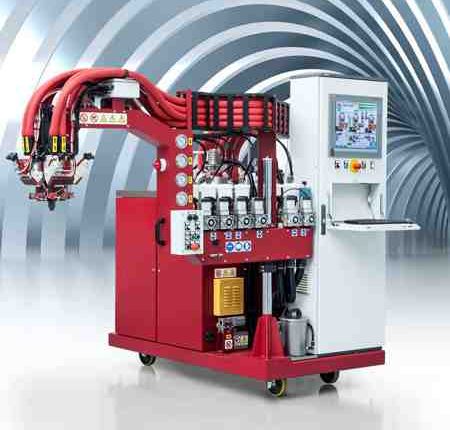
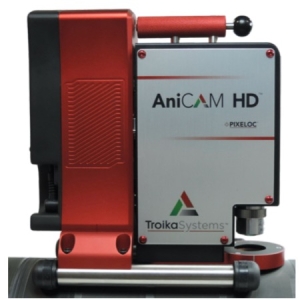
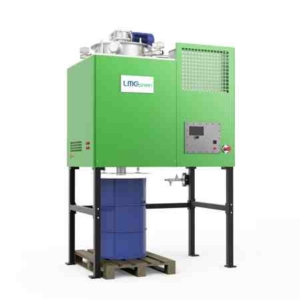
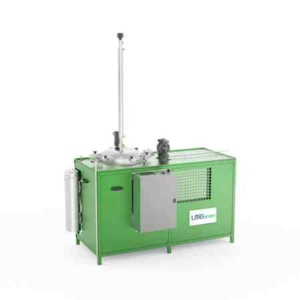
- Distribution – supply Material & Equipment Solutions and system support
- Development – polymer materials and product engineering
System Thinking Approach
We believe that polymer performance can only be optimized when materials, process conditions and product design are understood as one connected system.
We evaluate the entire system, not just individual components.
Material selection should be based on service life, performance, manufacturing efficiency, maintenance requirements, total cost of ownership, resource consumption, waste generation, and environmental impact throughout the entire lifecycle of the product.
The following examples demonstrate PU Consulting’s systems-thinking approach applied to real industrial materials and process challenges:
• Challenging Legacy Specifications Through Systems Thinking
”More”
The best results are achieved when engineering, operations, maintenance, procurement, and sustainability objectives are evaluated together rather than in isolation.
At PU Consulting, we use testing, analysis, and systems thinking to identify solutions that optimize performance, economics, and sustainability across the entire lifecycle.
”Less”
• Lifecycle Performance Matters More Than Material Weight
”More”
A material with a higher manufacturing footprint may still be the more sustainable solution if it lasts significantly longer and reduces maintenance, downtime, transportation, and waste.
”Less”
• Unlocking New Possibilities in Injection Moulding
”More”
This creates opportunities to reduce capital investment, energy consumption, floor space requirements, and overall manufacturing costs while maintaining product performance and quality.
Despite these advantages, adoption is sometimes uneven across regions and industries. In some markets, legacy specifications, established design practices, and procurement structures can slow the implementation of new solutions, particularly where evaluation criteria are still primarily based on conventional machine and tooling configurations rather than the performance of the complete manufacturing system.
A systems-thinking approach encourages manufacturers to reassess existing assumptions and explore how advances in tooling technology, mould design, and processing systems can improve productivity, sustainability, and total cost of ownership.
”Less”
• How Extrusion Systems Influence Final Material Performance and Mechanical Properties
”More”
Differences in extrusion technology, process control, screw design, and operator knowledge can significantly influence the final mechanical properties, consistency, and performance of the material.
Higher levels of process control and engineering knowledge in extrusion systems can improve polymer orientation, mixing efficiency, and thermal stability, resulting in more consistent and higher-performance materials.
In contrast, lower-cost extrusion systems may reduce capital expenditure, but can also introduce greater variation in processing conditions, which may negatively affect mechanical properties and long-term performance.
From a systems-thinking perspective, the true cost of a material is therefore not only defined by raw material price or machine investment, but by the interaction between equipment, process control, and final application requirements.
”Less”
• How Extrusion Systems and Material Selection (Recycled vs Virgin) Influence Final Material Performance
”More”
Recycled and virgin polymers can differ in viscosity stability, contamination levels, molecular weight distribution, and thermal behaviour. However, these differences are strongly influenced by how the material is processed.
Extrusion system design, screw configuration, temperature control, and process stability all play a key role in defining the final structure and performance of the material.
In some cases, well-controlled processing can allow recycled polymers to approach the performance of virgin materials. In other cases, insufficient process control can increase variability and reduce mechanical properties in both material types.
From a systems-thinking perspective, material performance should always be evaluated as the result of an integrated system, not a single input factor.
This includes material origin, process technology, and application requirements.
”Less”
• Industrial Furnace Systems and Remote Process Analysis
”More”
PU Consulting performs remote system-level analysis of furnace performance and process stability by evaluating available process data, temperature profiles, and airflow characteristics. This enables identification of inefficiencies and improvement potential without requiring immediate on-site inspection.
Typical findings include uneven temperature distribution, inefficient airflow design, process instability, and excessive energy consumption affecting both product quality and total cost of ownership.
By viewing thermal systems as part of the overall production chain, rather than isolated equipment, significant improvements can often be achieved in energy efficiency, process consistency, and lifecycle performance.
”Less”
Typical Results with Polymer System Optimization
- Improved production stability
- Reduced process variation
- Lower scrap rates
- Increased material efficiency
- Higher profitability
Industries We Serve
- Packaging
- Automotive
- Construction
- Recycling
- Industrial manufacturing
24/7 Production Support
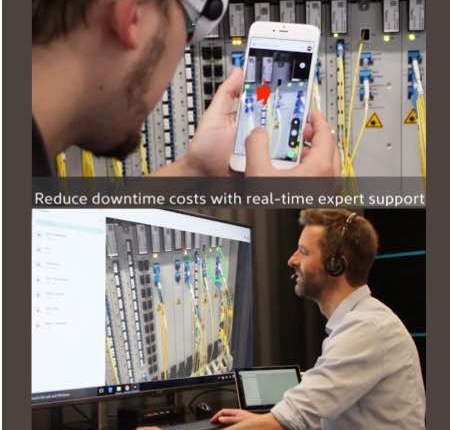
We provide rapid Polymer System Optimization support for critical production disruptions, high scrap rates and unstable polymer processes — remotely or on-site.
Contact PU Consulting AB
Do you want to improve production stability, reduce variation or optimize your polymer system?
Results
Our projects are focused on measurable improvements across production, product performance and sustainability.
- Improved production stability
- Reduced process variation
- Lower scrap rates
- Better material utilization
- Improved recycling performance
- Increased profitability
- Reduced process carbon footprint
- Reduced product carbon footprint
- Increased use of renewable and recycled materials
- Extended product lifetime